Your best life begins with a smile !!
Tobacco and Oral Health: A Silent Threat to Your Smile
Dr Rahul Anand
10/11/20252 min read
When we think of tobacco-related health risks, lung cancer and heart disease often come to mind.
Yet, the mouth—our gateway to the body—is one of the first and most severely affected areas. Whether smoked, chewed, or vaped, tobacco leaves a trail of destruction across the oral cavity, impacting everything from the gums to the bones that support our teeth.
The Many Faces of Tobacco Damage
Tobacco use—be it cigarettes, cigars, hookah, e-cigarettes, or smokeless forms like snuff and chew—can cause a wide range of oral health issues:
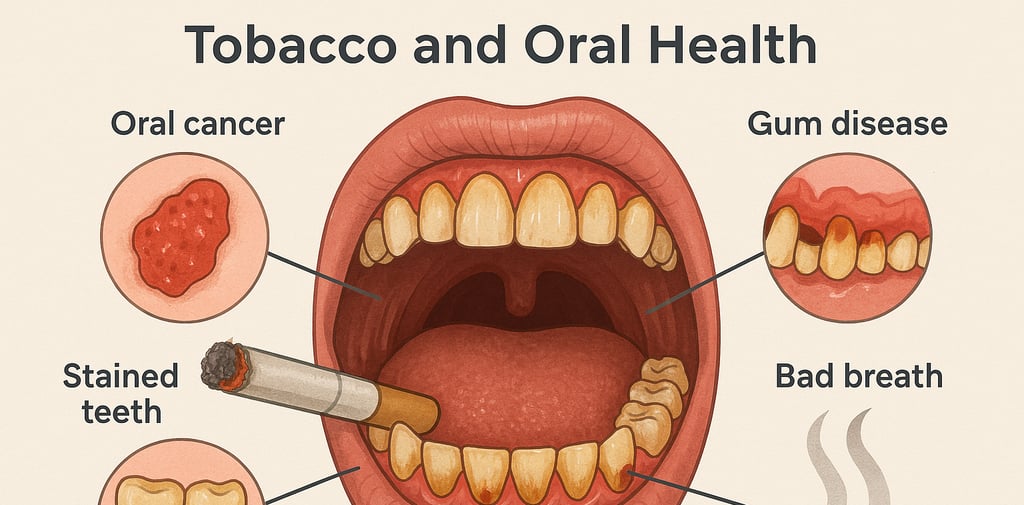
Gum Disease and Tooth Loss: Smoking reduces blood flow and impairs the immune response, making it harder for gums to fight off infections. This leads to gingivitis and, eventually, periodontitis—a severe gum infection that can result in tooth loss.
Oral Cancer: Tobacco contains carcinogens that increase the risk of cancers of the lips, tongue, throat, and gums. Even non-inhaled forms like cigars and smokeless tobacco are linked to oral malignancies.
Delayed Healing: Smokers often experience slower recovery after dental procedures such as extractions or implants. The risk of implant failure is significantly higher due to conditions like peri-implantitis, which involves inflammation and bone loss around the implant site.
Dry Mouth and Bad Breath: Tobacco reduces saliva production, which is essential for neutralising acids and washing away food particles. This dry environment fosters bacterial growth, leading to halitosis and increased cavity risk.
Cosmetic Concerns: Nicotine and tar stain teeth, dulling the natural whiteness of your smile. These stains are often resistant to whitening treatments unless tobacco use is discontinued.
Smokeless Tobacco: Not a Safe Alternative
Many believe smokeless tobacco is less harmful, but the reality is starkly different. These products expose gum tissues to concentrated doses of nicotine and carcinogens, causing gum recession, root decay, and a significantly higher risk of oral cancers.
The Vaping Dilemma
E-cigarettes, often marketed as safer alternatives, are not without risk. Sticky aerosols from e-liquids cling to teeth and gums, promoting bacterial growth and inflammation. Users report symptoms like dryness, irritation, and discomfort, which can escalate into more serious conditions over time.
Second-Hand Smoke: A Hidden Hazard
Even those who don’t smoke directly are at risk. Second-hand smoke contains many of the same harmful chemicals and can lead to gum disease, tooth decay, and oral cancers in non-smokers.
Quitting: A Path to Healing
The good news? Quitting tobacco can halt further damage and significantly improve oral health. Within five years of cessation, the risk of oral cancers can be cut in half. Healing accelerates, gum health improves, and the success rate of dental treatments like implants increases dramatically.
Final Thoughts
Tobacco doesn’t just harm your lungs—it attacks your smile, your confidence, and your overall wellbeing. As dental professionals, we have a responsibility to educate, support, and empower our patients to make healthier choices. If you or someone you know is struggling with tobacco use, reach out. There are effective strategies and support systems available to help you quit.
Your smile is worth protecting. Let’s keep it bright, healthy, and tobacco-free.
Follow
Connect
info@dantsutra.com
+91-9974973469
© 2025. All rights reserved.